Photography Guides · 11 min read
Photoshoot Poses: A Practical Guide for Models and Photographers
Use these photoshoot poses, movement prompts, and safety checks to create natural portraits, model tests, and campaign images in the Philippines.
TL;DR: A useful photoshoot pose is not a shape you copy and hold. It is a starting position plus a small action: shift weight, turn through the light, give the hands a job, and change the eye line. Models get more natural images, and photographers get more usable frames, when direction is specific, consent-based, and built around the brief.
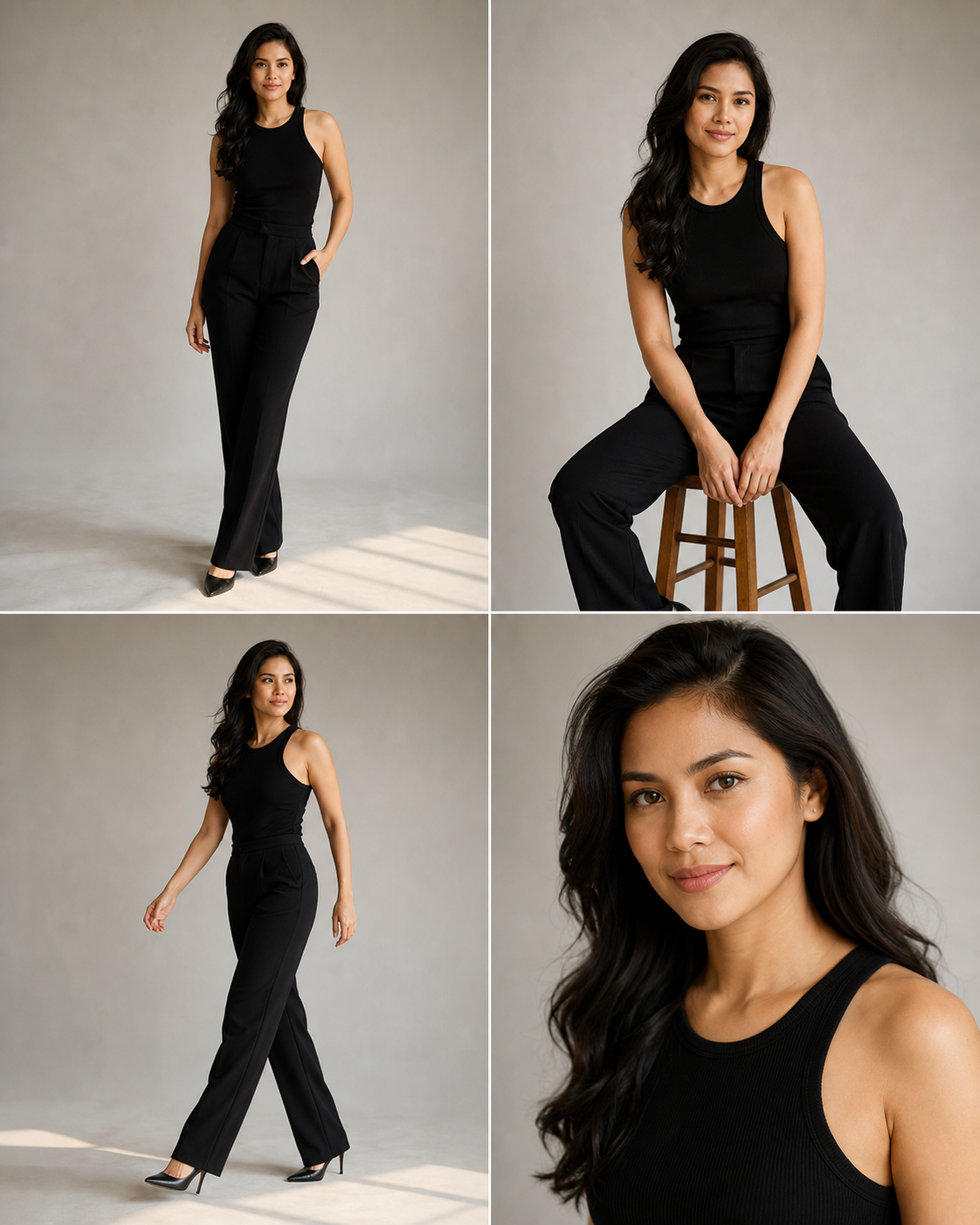
The same model, wardrobe, and light can produce very different portfolio evidence when the direction changes. The generated image is an instructional example, not a real person’s portfolio.
A photoshoot pose is a deliberate arrangement of body, expression, hands, and attention for the camera. The goal is not to make every person look like the same reference image. It is to help a viewer understand the subject, clothing, product, or story in the frame.
For a portfolio test in Manila, a commercial shoot in Quezon City, or a small brand session in Cebu, the same rule applies: choose poses that support the job. A beauty close-up needs facial control and clean hands. An e-commerce image needs a clear view of the garment. A lifestyle campaign needs believable movement. This guide is for models, creators, photographers, and clients who want a repeatable way to direct those choices.
Start with the brief, light, and frame
Before suggesting a pose, decide what the image needs to communicate. A model may be the focus, but the frame might also need to show a jacket, a skincare product, a restaurant table, or room for a brand headline. A strong pose for a vertical Reel crop can be a poor pose for a wide website banner.
Write three short notes before the shoot: the subject of the image, the intended crop, and the desired mood. “Warm, approachable café campaign; horizontal hero plus vertical social crops” gives a team something concrete to solve. “Make it cool” does not.
The location and light are part of the pose. Side light from a window may reward a gentle turn toward the brighter side. Harsh midday sun in Bonifacio Global City may make open shade, a covered walkway, or a later call time more sensible. A small studio may need a chair or wall so a beginner has a physical reference point. The Adobe photoshoot ideas guide is useful for concept planning, but the most valuable reference is the real light available at the booked location.
| Shoot need | Pose priority | Simple direction | | ------------------ | ----------------------------------------- | ------------------------------------------------------ | | Model digitals | Accurate proportions and clear face | “Stand tall, relax your hands, look straight ahead.” | | Beauty or skincare | Face, neck, hands, and product visibility | “Turn slightly to the light and keep fingertips soft.” | | E-commerce | Garment shape and consistent angles | “Show the front, then turn slowly through profile.” | | Lifestyle campaign | Believable activity and connection | “Walk, check the product, then look to your friend.” | | Editorial portrait | Mood and a clear silhouette | “Hold the shape, then change only your eye line.” |
Plan for both stillness and movement. A person who is asked to freeze immediately often holds their breath and tightens their shoulders. Start with a slow walk, an adjustment to a sleeve, sitting down, or looking toward a landmark. Capture the transition, then pause when the shape is working.
Build a balanced standing pose
The standing pose is the foundation for portraits, catalog images, model tests, and event coverage. It does not require an extreme hip pop or a complicated arm position. It needs balance, length, and a reason for the limbs to be where they are.
Begin with weight. Ask the subject to put most of their weight on one leg, then soften the other knee. This creates a quieter line through the hips and avoids the squared, passport-photo stance. Next, turn the shoulders a little away from camera while bringing the face back toward the lens or the light. That small separation usually creates depth without hiding the person.
Hands need a purpose. A hand can touch a collar, rest on a bag, hold a product, slip lightly into a pocket, or sit near the waist without pressing flat against it. Avoid giving a hand a dramatic task it would never do in the real scene. If the hands feel awkward, photograph through a sequence: hand down, hand adjusting fabric, hand at the neck, hand holding an object. The useful frame is often between two instructed positions.
For photographers, direct one change at a time. “Shift your weight to your back leg, turn your chest toward the window, relax the near hand, now look past me” is clear. “Pose more naturally” asks the subject to solve too many things at once. Demonstrate the action if language, experience, or nerves make the instruction unclear.
Use seated poses and simple props to create options
Sitting gives people a structure. It can make a first-time model feel less exposed and gives photographers several angles without changing the set. Use a stable chair, low step, bench, or clean floor only when it fits the concept and is safe.
Start with the subject near the front edge of the seat, feet placed rather than dangling, and a long but not rigid spine. Ask them to lean forward slightly with elbows resting lightly on thighs, then lean back and turn toward the light. A second variation is to sit sideways, place one foot on the floor, and look back over the shoulder. Each version changes the silhouette while preserving the same wardrobe and lighting setup.
Props should solve a posing problem, not decorate every frame. A coffee cup can support a café campaign; a jacket can create hand movement; a stool can establish levels in a studio. For commercial work, make sure the prop is being held and shown in a way that a client can actually use. Photograph a clean product frame before the more expressive alternatives.
The Adobe DIY photoshoot guide offers accessible set ideas, but props are only useful after the essentials are covered: full length, three-quarter, close-up, detail, vertical, horizontal, and a movement frame. A beautiful prop cannot rescue a missing campaign crop.
Direct face, chin, eyes, and hands without overcorrecting
Small face adjustments matter more than large body changes in a close portrait. Ask the subject to bring the chin slightly forward and down only when it improves the chosen angle; pushing too far can look strained. Move the eyes toward the lens, the key light, a point above camera, or a real person in the scene. Each eye line creates a different message.
Expression should match the brief. A commercial food image can benefit from warmth and attention toward a companion. A beauty image may need relaxed lips and a calm gaze. An editorial portrait may work with distance or tension. Do not ask a person to “look sexy” or “be mysterious” without describing the observable action you mean. Try “slow your breathing, let your shoulders drop, and look beyond the camera” instead.
Hands deserve the same calm instruction. Keep fingers separated enough to read, wrists soft, and palms turned only when the brief needs them visible. In beauty work, hands can frame the face or product. In a fashion image, one hand can adjust a cuff while the other relaxes. In a brand shoot, do not cover the logo, packaging, or key detail.
Posing sequences for model portfolios and client work
A portfolio should show range, not five versions of the same angle. Build sequences around what a casting director, agency, or client needs to assess. A beginner can complete this list in one modest test shoot.
- Clean headshot: neutral expression, then a warm variation; keep hair and lighting simple.
- Full-length front and profile: show proportion, posture, clothing, and natural stance.
- Three-quarter portrait: turn the shoulders, use a small eye-line change, and leave room for crop.
- Seated frame: show a different level and a relaxed hand position.
- Walking or turn sequence: capture a real transition instead of an artificial action pose.
- Close beauty frame: show skin, hair, or makeup only with the subject’s comfort and the brief’s permission.
- Market-specific image: add a product-in-hand frame, a commercial lifestyle scene, or an editorial look that reflects the work you want.
Models can browse Idol’s model directory to see how clients compare talent, while photographers can share a clear brief before a shoot rather than relying on an unstructured inspiration board. For broader planning, Photoshoot Ideas includes a shot-list framework; for new talent, How to Become a Model in the Philippines explains how digitals and portfolio images fit into legitimate applications.
Protect consent, privacy, minors, and usage rights
Direction never overrides consent. Ask before touching a subject, moving clothing, using an intimate angle, sharing behind-the-scenes video, or posting an image that reveals a location. If someone says no, changes their mind, or seems uncomfortable, use another setup. Verbal direction, a mirror, and demonstration are usually sufficient.
Photos and contact details can identify a person. The National Privacy Commission’s Data Privacy Act guidance is a useful Philippine reference for handling personal information deliberately. Keep phone numbers, home addresses, identity documents, and private schedules out of public captions and shared folders. Agree before the shoot on who can access selects, how long raw files are kept, and whether a client, agency, or collaborator may post the work.
Minors need an extra layer of care. DOLE notes that public entertainment or information work can involve permits and safeguards for working children; review the current DOLE guidance on minors in public entertainment with a parent or guardian and the relevant authority. Keep a parent or guardian involved, use appropriate locations and wardrobe, name every adult present, and never treat a minor’s participation as implied consent for broad future use.
Put business terms in writing. The Intellectual Property Code is a useful starting point for understanding why ownership and permission should not be guessed. A simple shoot agreement can state the purpose, fee or collaboration arrangement, delivery date, edits, credits, portfolio permission, advertising use, and cancellation plan. It is not legal advice, but it reduces the chance that a test shoot becomes a dispute about who can publish what.
A practical posing checklist for shoot day
- [ ] Confirm the brief, crop needs, call time, location, and who is attending.
- [ ] Photograph the essential full-length, three-quarter, close-up, detail, vertical, and horizontal frames first.
- [ ] Start with movement; make one clear adjustment at a time.
- [ ] Check hands, chin, shoulders, clothing, hair, and product visibility before changing sets.
- [ ] Ask before any touch, private angle, behind-the-scenes recording, or location tag.
- [ ] Record payment, delivery, credits, and usage terms before the team leaves.
- [ ] For minors, involve the parent or guardian and confirm current safeguards before the shoot.
Frequently Asked Questions
How can I pose naturally in a photoshoot?
Start with an action, then make one small adjustment at a time: shift weight, turn the shoulders, give the hands a job, and choose where to look. Movement produces more natural options than holding a single frozen pose.
What are the essential poses for a model portfolio?
Include a clean headshot, full-length front and profile views, three-quarter portrait, seated pose, walking or turning frame, close-up, and one image that shows your intended market such as beauty, commercial, or e-commerce.
How should photographers direct beginner models?
Give short, visible instructions instead of saying be natural. Name a body part and a direction, such as turn your chest toward the window, lower the near shoulder, look at your hand, then take one slow step.
Can a photographer touch a model to adjust a pose?
Ask first and accept no without pressure. Verbal direction, a mirror, or demonstrating the pose are usually enough; any necessary physical adjustment should be specific, professional, and consented to each time.
What should a photoshoot agreement say about images?
Record the shoot purpose, deliverables, fee or collaboration terms, delivery date, credits, usage rights, editing limits, posting permissions, location, and who may approve or share images of minors.
Make the next frame easier to direct
The best photoshoot poses make the subject feel capable rather than controlled. Start with a clear brief, direct one visible adjustment at a time, protect consent and the agreed use of images, then select the frames that prove the kind of work you want next. When you are ready to show that work to brands and collaborators, create an Idol talent profile with current images, location, and specialty.
Frequently asked questions
How can I pose naturally in a photoshoot?
Start with an action, then make one small adjustment at a time: shift weight, turn the shoulders, give the hands a job, and choose where to look. Movement produces more natural options than holding a single frozen pose.
What are the essential poses for a model portfolio?
Include a clean headshot, full-length front and profile views, three-quarter portrait, seated pose, walking or turning frame, close-up, and one image that shows your intended market such as beauty, commercial, or e-commerce.
How should photographers direct beginner models?
Give short, visible instructions instead of saying be natural. Name a body part and a direction, such as turn your chest toward the window, lower the near shoulder, look at your hand, then take one slow step.
Can a photographer touch a model to adjust a pose?
Ask first and accept no without pressure. Verbal direction, a mirror, or demonstrating the pose are usually enough; any necessary physical adjustment should be specific, professional, and consented to each time.
What should a photoshoot agreement say about images?
Record the shoot purpose, deliverables, fee or collaboration terms, delivery date, credits, usage rights, editing limits, posting permissions, location, and who may approve or share images of minors.